Biennial of Contemporary Keramics 2026: Rhodes, Greece




Curators: Stamatia Dimitrakopoulos, Loukia Thomopoulou, and Anissa Touati
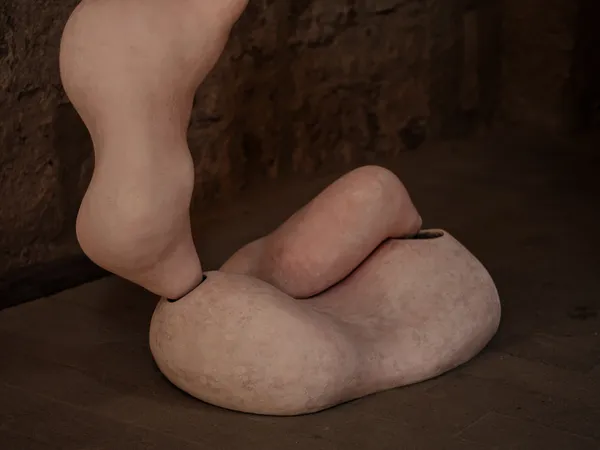
For the Biennale of Contemporary Keramics in Rhodes (2026), Vuslat’s installation unfolds from the threshold of the Panagia tou Kastrou, a former Greek Orthodox church in the Medieval City of Rhodes also known as Our Lady of the Castle. This site is located across from the Archaeological Museum—one of the Biennale’s two main exhibiDon spaces and Vuslat's work extends gently into its interior, creating a bridge to sanctity. Multiple pieces of organic clay populate the entrance and beckon visitors inside the former religious space, forming a subtle spatial rhythm. Each piece resembles the formless shape of breath, inviting us to remember life, presence, and the moment. The forms seem briefly suspended between matter and air, recalling the movement that sustains life but often escapes attention. As visitors enter, the installation encourages a slowing down—an attunement to breath as a reminder of continuity and the flow of life moving through bodies, spaces, and time.
Shaped from earth and transformed through water and air, each piece carries the vulnerability and endurance inherent in the natural world. Each piece is estranged from breath and united with the qualities of air and water. These are totems of hope in a field of desperation. Each form acts as a quiet confirmation of the continuity of life. Through repetition, the organic pieces echo remembrance and memory, forming a gradual collective presence within the architecture of the medieval holy site. In their gathering, these fragments find a home in togetherness. The installation becomes an offering—an attentive space where silence, breath, and material presence invite reflection on memory, care, and the delicate networks of continuity that sustain life.